Posted on — Leave a comment

AI Agents Explained: How Agentic AI Helps Business

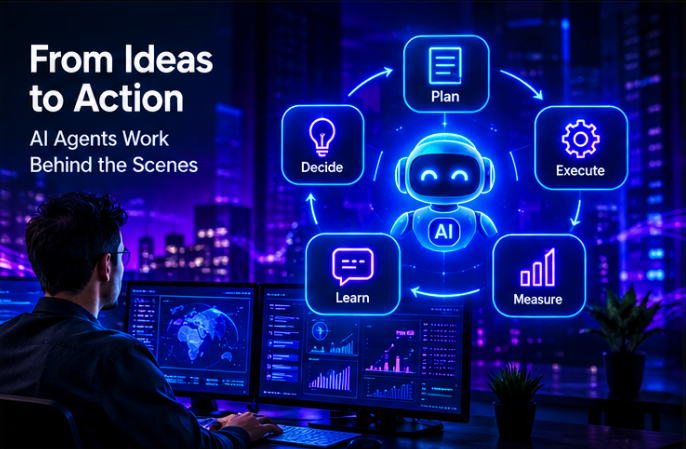
Artificial intelligence has moved far beyond chatbots that answer questions. In 2026, businesses are adopting AI agents, smart systems that can plan, decide and complete tasks on their own. This new approach is called agentic AI, and it is changing how companies handle customer support, sales, operations and software development.
In this guide, we explain what AI agents are, how they work, where they deliver real value, and how your business can start using them safely.

What Are AI Agents?

An AI agent is a software system that can understand a goal, break it into steps, use tools and take action to achieve that goal, with little or no human help at each step.

A regular AI chatbot waits for your question and gives an answer. An AI agent goes further. If you say, “Follow up with every lead who has not replied this week,” the agent can check your CRM, write personalised emails, send them, and log the results.

In simple words: a chatbot talks, an AI agent works.


What Is Agentic AI?

Agentic AI is the approach of building AI systems that act with a degree of independence. Instead of producing one output per prompt, agentic systems:

  • Set and follow goals
  • Plan multi-step tasks
  • Use external tools such as email, databases, APIs and calendars
  • Learn from results and adjust their next move
  • Ask a human for approval when a decision is risky

This is why agentic AI is often described as the shift from AI that assists to AI that acts.

How Do AI Agents Work?

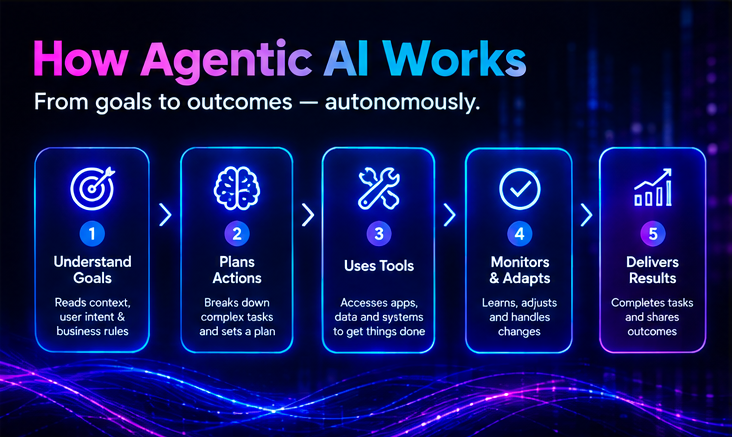
Most AI agents follow a simple loop:

  1. Perceive: The agent receives a goal, message or trigger, such as a new customer email.
  2. Think and plan: A large language model (LLM) breaks the goal into smaller steps.
  3. Act: The agent uses tools to carry out the steps, such as searching a database, sending an email or updating a record.
  4. Check: It reviews the result and decides if the goal is complete.
  5. Improve: It adjusts the approach, or asks a human for help if it is stuck.

Behind the scenes, an agent usually combines an LLM, a memory of past context, access to your business tools, and clear rules about what it is and is not allowed to do.

Build or Buy: Custom AI Agents vs Ready-Made Tools

Ready-made AI tools are quick to launch and work well for general tasks. However, if your workflow is unique, or you need deep integration with your own software, a custom AI agent is often the better long-term choice. Custom solutions can be tailored to your data, your processes and your security requirements.

A good IT partner can help you decide which route is right, design the architecture, build the integrations and keep the system secure.

The Future of AI Agents in Business

Agentic AI is still evolving, but the direction is clear. Businesses will increasingly use teams of specialised agents that work together, one for research, one for writing, one for data and one for customer communication, supervised by people. Companies that start learning and experimenting now will be better prepared as the technology matures.

Conclusion

AI agents and agentic AI are moving businesses from simply using AI to working with AI. By automating routine tasks, responding faster and supporting better decisions, agents can help companies save time, reduce costs and grow. The best approach is to start small, set clear guardrails, measure results and scale step by step.

Posted on — Leave a comment

The Power of Professional Etiquette in Building a Positive Work Culture

In today’s fast-paced and competitive work environment, technical skills and qualifications alone are not enough to ensure success. What truly sets individuals and organizations apart is how people behave, communicate, and treat one another at work. This is where professional etiquette plays a vital role.

Professional etiquette is more than just saying “please” and “thank you.” It reflects respect, responsibility, and awareness in the workplace. When practiced consistently, it becomes the foundation of a positive work culture, fostering collaboration, trust, and long-term growth

What is Professional Etiquette?

Professional etiquette refers to the set of unwritten rules that guide behavior in a workplace. It includes:

  • Respectful communication
  • Punctuality and time management
  • Proper email and meeting conduct
  • Maintaining professionalism in interactions
  • Being mindful of others’ time and space

These small yet impactful behaviors shape how employees perceive each other and the organization as a whole.


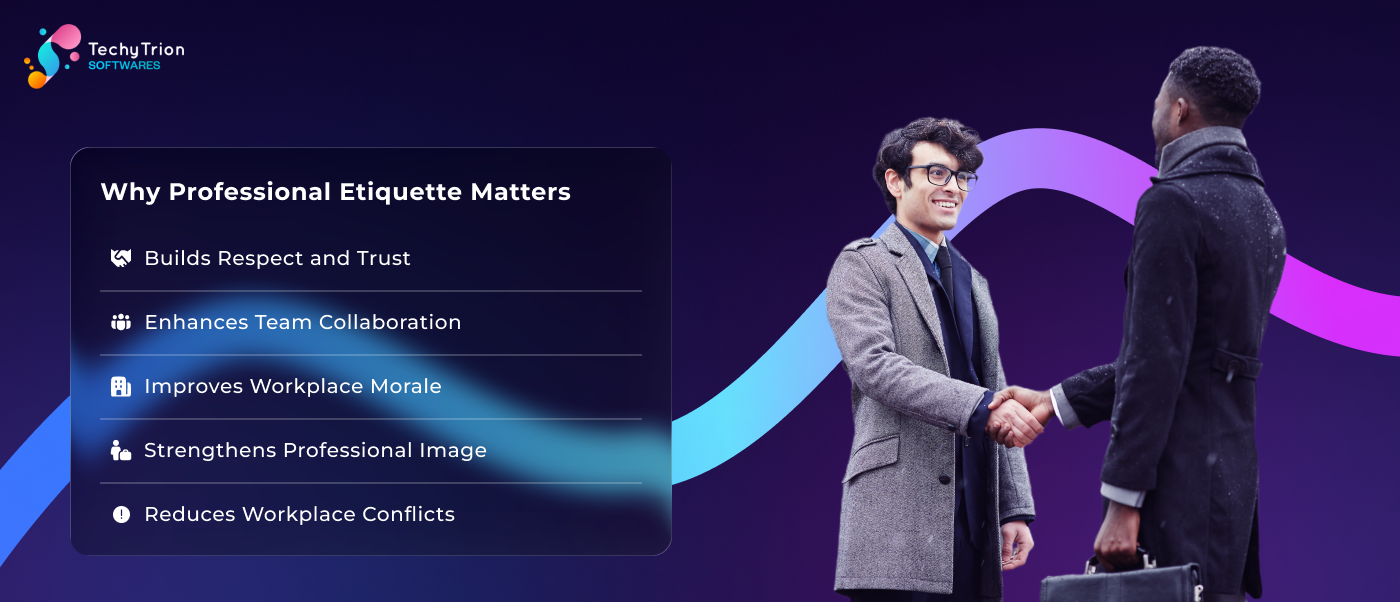
Why Professional Etiquette Matters

  1. Builds Respect and Trust

Respect is the backbone of any successful workplace. When employees communicate politely, listen actively, and value others’ opinions, it builds mutual trust. A respectful environment encourages people to share ideas openly without fear of judgment.

  1. Enhances Team Collaboration
    Good etiquette promotes smoother communication and reduces misunderstandings. Teams that practice professionalism are more likely to collaborate effectively, leading to better problem-solving and innovation.
  2. Improves Workplace Morale

A workplace where employees feel respected and valued naturally has higher morale. Simple gestures like acknowledging efforts, being courteous, and maintaining a positive attitude can significantly boost team spirit.

  1. Strengthens Professional Image

Employees represent the organization. Their behavior reflects the company’s values and culture. Strong workplace etiquette enhances both individual and organizational reputation, especially when interacting with clients or stakeholders.

  1. Reduces Workplace Conflicts

Many workplace conflicts arise from miscommunication or lack of respect. Practicing proper etiquette minimizes misunderstandings and helps maintain a harmonious environment.

Key Elements of Workplace Etiquette

✔ Effective Communication

Clear, polite, and professional communication—whether verbal or written—is essential. Avoid interrupting others, use respectful language, and ensure messages are concise and appropriate.

✔ Punctuality

Being on time shows respect for others’ schedules. Whether it’s meetings, deadlines, or daily reporting, punctuality reflects reliability and discipline.

✔ Email and Digital Etiquette

In the digital age, communication often happens through emails and messaging platforms. Using proper tone, avoiding unnecessary messages, and responding timely are crucial aspects of professionalism.

✔ Respect for Diversity

Workplaces today are diverse. Respecting different perspectives, cultures, and working styles is key to maintaining an inclusive environment.

✔ Professional Appearance and Behavior

Maintaining appropriate dress code, body language, and conduct helps create a professional atmosphere.


Role of Organizations in Promoting Etiquette

Building a culture of professionalism is not just an individual responsibility—it’s also an organizational effort. Companies can:

  • Provide etiquette and soft skills training
  • Set clear behavioral expectations
  • Lead by example through management
  • Encourage open communication and feedback
  • Recognize and reward professional behavior

When leadership demonstrates strong etiquette, employees are more likely to follow

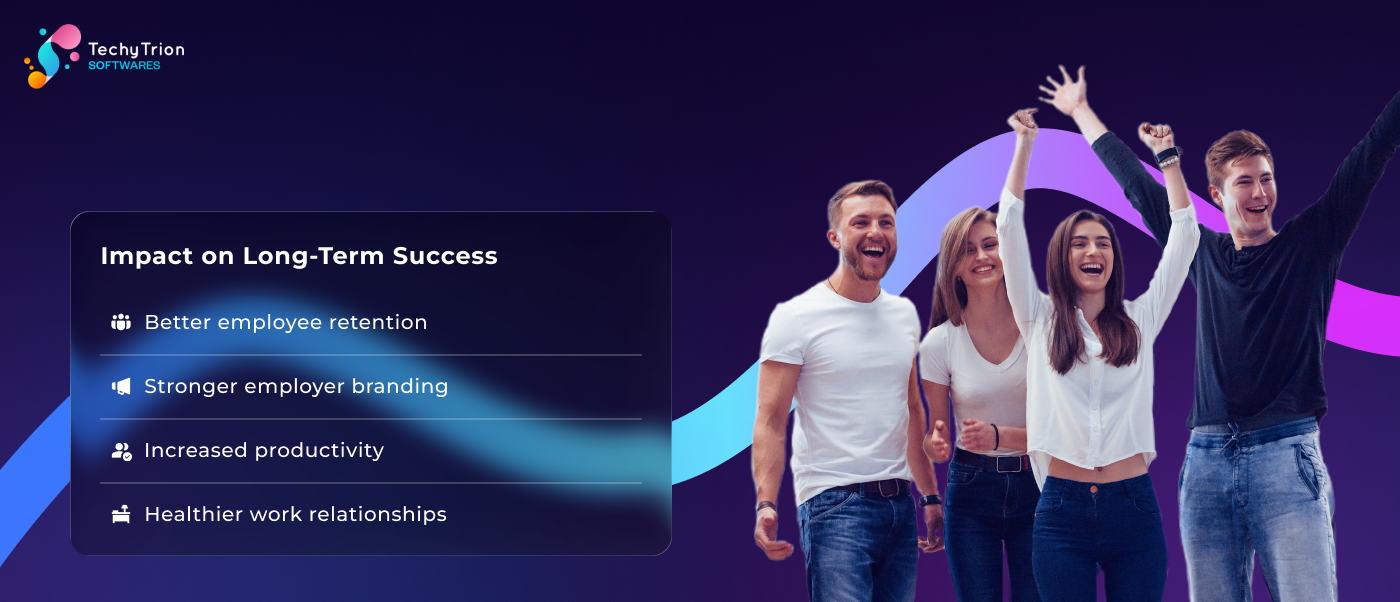
Impact on Long-Term Success

A workplace built on professional etiquette experiences:

  • Better employee retention
  • Stronger employer branding
  • Increased productivity
  • Healthier work relationships

Ultimately, a positive work culture leads to both employee satisfaction and business success.

Conclusion

Professional etiquette may seem like a small aspect of workplace behavior, but its impact is powerful and far-reaching. It shapes how employees interact, collaborate, and grow together.

By practicing simple yet meaningful habits—respect, communication, punctuality, and professionalism—organizations can create a work environment where people feel valued and motivated.

In the end, a positive work culture is not built overnight—it is cultivated through everyday actions and consistent professional behavior.

Posted on — Leave a comment

Generative AI

🌐 How Generative AI Is Revolutionizing Software Development and Data Analytics
The digital landscape is undergoing one of its most significant shifts yet, with generative AI leading the way. Generative AI has progressed from producing text, images, and video to fundamentally altering how we develop code, process data, and make decisions, going beyond the revolutionary aspects of impact and productivity. In the new world of generative AI, it will not simply be a tool to help improve
productivity, but will act as a collaborator, co-pilot, and driver of innovation.

Let us look at how Disruption is changing two of the most important pillars of the technology world: software development and data analytics.

󰠁 Part 1: Software Development – From Writing Code to Engineering Intelligence


Software development has traditionally relied on both a craft and a science, requiring extensive logic, long hours, attention to details, and complete focus. Developers will no longer be starting with a blank canvas given new generative AI tools can now act as a co-pilot and co-developer with context-aware prompts, code generation, suggest optimizations, and help obstain errors.

💡 Key Transformations in Software Development:
1. AI as a co-developer

With tools like GitHub Co-Pilot and Amazon CodeWhisperer powered by large language models, they will suggest whole lines, or blocks of code. Code known to be well trained from open-source code warehouses enables AI co-developers to produce accurate, quality contextual suggestions.
2. Increased productivity
By greatly reducing time spent on mundane tasks: logging into an app or correcting mistakes in API code, developers will be able to focus on the important aspects of applications, especially core logic, system design, and user experience. Applications will be developed faster and allow better quality to those applications.
3. Automated Testing and Debugging
Generative AI tools can detect bugs, develop test cases and suggest fixes. Generative AI will detect errors on the frontend and backend, speeding-up the QA process and should reduce the quality management burden on QA groups.
4. Democratizing Development
Development for all because of the implementation and growth of natural-language to code tools all persons will be able to develop a simple application, opening the door to all product managers, and software will be available to everybody.
5. Smart Documentation
AI tools have now reached the point where they can auto-generate documentation based on code comments, commit messages, and utilization patterns. This allows teams to maintain cleaner, better-documented code bases, which has tremendous value in agile and fast-paced environments.

📈 Part 2: Data Analytics – From Data Crunching to Data Conversations
Time has always been the enemy of data analytics, and analysts often spend 80% of their time cleaning, shaping, and organizing data – leaving only a fraction of their time dedicated to extracting meaningful insights. Enter Generative AI! It’s changing the way organizations approach data and moving them away from purely reactive dashboards to proactive bi conversational intelligence.

📊 Key Evolutions in Data Analytics:


1. Conversational BI (Business Intelligence):
Generative AI allows users to interact with their data using natural language queries. For instance, you could say, “What were our top 5 revenue-generating products in Q2?” and the natural language query could produce a visualized response within seconds.
2. Automated Report Generation:
AI can now produce full reports that include summaries, visuals, and trending data based on data found within CRMs, ERPs, and custom dashboards. If leadership requires needing to make informed decisions, AI can provide full reports quickly and easily.
3. Predictive & Prescriptive Insights:
Generative AI has the capabilities to not just report on what happened in the past, but forecast what trends, or anomalies might occur based on historical data and in fact to be prescriptive in terms of suggesting future actions based on data – moving analytics from descriptive to predictive and prescriptive.
4. Faster Data Preparation:
Data cleaning, transformation, and enrichment, historically the most tedious aspect of an analyst’s job, is now getting burned down by AI models that are trained to recognize patterns, identify errors, and ultimately recommend the ideal data structure for their use case.
5. Accessibility to Non-Analysts:
More easily bringing Raw Data to BI solutions with much more useful, faster, and flexible interactive desktop applications/connected apps and then a user-friendly Report/BI tool with intuitive interfaces for thousands of decisions is finally at a place where non-analysts can become analysts! More easily bringing raw data to BI solutions with much useful, faster and flexible interactive

🔄 When Software and Analytics Merge: The True Power of AI
The true magic occurs when generative AI convergences with software and data analytics.


Imagine:
✅ An AI powered application that processes transactions and tracks users to suggest UX improvements based on usage data.
✅ A SaaS product that automatically generates personalized performance summaries for each person on a team as informed by CRM metrics.
✅ A retail dashboard that combines live sales data with seasonal patterns and social sentiment, and suggests actions for inventory. Welcome to the age of AI-native systems—platforms that do not just act on human input, but mechanize learning, action, and adaptation.

🚧 Challenges to Address
Of course, with great power comes great responsibility. As the organizations begin to use generative AI, they will need to think about:
Bias in AI models: Ethical and responsible use of AI will require continual checking of outputs and even the training data.
Data privacy: Generative AI will need to comply with global data and privacy laws and regulations, including GDPR, HIPAA etc.
Model transparency: Knowing how the AI came to its decision (model explainability) is imperative for high-stakes uses.
Dependence issues: Teams will need to be aware about unquestioning reliance on code or insights generated by AI with our human minds.

🌍 The Road Ahead
For better, generative AI is still rapidly maturing, and we can already see:
AI copilots embedded in our IDEs, BI tools, and business apps.
Models that are vertically-specific that are pre-trained for use in healthcare, finance, and education.
AI-assisted development life cycles – planning all the way through deploying including customer feedback loops.
But, this is just the beginning.
The future isn’t going to be built by AI alone, but from human beings who can utilize AI.

✨ Conclusion
Generative AI is not threatening developers or analysts—it’s a way to expand their potential. And, as we move forward with business as usual, those who are quick to adopt this technology will create unprecedented efficiencies, insights, and value. The experience of creation, analysis, and thought are beginning to merge, and at the center of it all is Generative AI—our most powerful collaborator yet.

Posted on — Leave a comment

Open AI

main-01

An Insight Into OpenAI – A Revolutionary Organization in AI

Introduction
Changing the way humans live and work, AI, according to many, has claimed the very center stage of the OpenAi set-up that is making this change possible. OpenAI was founded in 2015 with the mission of advancing AI research and ensuring that any innovations in the domain benefit humanity. However, what precisely does OpenAi perform, and why is it so important?

What is OpenAI?
OpenAI is an artificial intelligence research and deployment company that develops state-of-the-art AI models and applications. It seeks to align AI’s behavior with our values and, to this end, has created AI that is safe and useful to people. OpenAI started as a not-for-profit organization but eventually settled for a “capped-profit” model in order to attract large-scale funding for research.

OpenAI Major Contributions


 GPT Series
 The GPT series is OpenAI’s trademark, the very model from which ChatGPT draws its powers. These language models are capable of human-level text generation, assisting users in   writing endeavors, or carrying on entertaining conversations. With each new version, like GPT-4, the paradigm for AI-human communication has been pushed even further.
 DALL·E-The Image Generation AI
 It is an AI model for generating images from a text description. It therefore democratizes AI art and becomes a facilitator of creativity in different domains.
 Codex and GitHub Copilot
 GitHub Copilot is an OpenAI-powered AI assistant for programmers. It assists developers in writing and completing particular code snippets for particular tasks thereby improving the   efficiency of software development.
 Robotics and Reinforcement Learning
 OpenAI has also worked on AI-oriented robotics and reinforcement learning, the study of how AI interacts and learns from the environment to solve complex problems.

How OpenAI Differs from Our Lives


Content Generation: Writers, marketers, and content creators use OpenAI’s models in writing, editing, and brainstorming.
Education: AI tutors and research tools aid students and instructors.
Customer Service: Chatbots powered by OpenAI enhance response rates and improve customer satisfaction.
Healthcare: Applications for AI in research, diagnosis assistance, and interaction with patients. Despite the advantages of AI, it still faces the challenges of misinformation, biases, and ethical concerns over automation. OpenAI focuses on the research of AI in the future to make it safer and more dependable through the establishment of guardrails for its responsible use.

Future Of OpenAI


OpenAI continues to explore into the future by experimenting with multimodal AI (combining with text, images, and sound) and examining AI safety and alignment aspects over the
coming years. An even more advanced breed of AI models is expected to follow to integrate AI into life more seamlessly.

Conclusion
The achievement of OpenAI thus stands at the apex of the field of AI, marking the beginning of a revolution in the way humanity interacts with technology. OpenAI is rewriting the rules for enabling AI to be more available and impactful across industries with its advanced chatbot and creative AI tools and development led by AI.

Posted on — Leave a comment

Machine Learning

Black-and-Blue-Modern-AI-and-Machine-Learning-Presentation

What is Machine Learning?
Machine learning (ML) is a branch of artificial intelligence (AI). It enables systems to learn and make decisions without explicit programming. ML algorithms examine data patterns to predict outcomes, identify trends, and improve over time.

Why is Machine Learning Important?
Machine learning has an impact on industries. It automates tasks, aids in making better decisions, and uncovers insights in large datasets. We encounter ML applications everywhere: from personalized recommendations on streaming platforms to self-driving cars and tools to diagnose medical conditions.

How Does Machine Learning Work?
Machine learning involves three main steps:
Data Collection: Preparing data to analyze. This includes cleaning, organizing, and labeling data.
Model Training: Feeding data into algorithms builds a model that can predict outcomes.
Common algorithms include decision trees, neural networks, and support vector machines.
Evaluation and Enhancement: Testing the model’s performance with validation data and fine-tuning it to improve accuracy.

Types of Machine Learning
Supervised Learning :  This approach teaches models using tagged information. A good example is forecasting home values based on past data.
Unsupervised Learning : This method spots trends in untagged data. It has uses in grouping customers and spotting odd patterns.
Reinforcement Learning: This technique teaches through trial and error giving rewards or punishments. It finds use in robotics and gaming.

Common Uses of Machine Learning
Healthcare: This field uses it to guess illnesses, look at medical pictures, and create custom care plans.Finance: It helps to catch fraud, guess stock prices, and figure out credit risks.
Retail: It’s used for personal suggestions, stock control, and changing prices on the fly.
Transportation: It powers self-driving cars, traffic guesses, and finding the best routes.
Natural Language Processing (NLP): This area covers chatbots, tools for translation, and working out feelings in text.

Challenges in Machine Learning
Problems in Machine Learning Even with its promise, ML runs into some roadblocks:
Data Quality: Bad data can result in flawed models.
Bias and Fairness: Making sure models are fair and ethical.
Scalability: Dealing with big data sets .
Interpretability: Helping humans understand how models make choices.

Future of Machine Learning
Machine learning has a bright and exciting future, especially with advancements involving : Edge Computing Running ML models on devices like smartphones and IoT.
Explainable AI : Developing systems that provide transparent reasoning behind their decisions
Quantum Computing : Enabling faster and more complex computations for ML.

Black and Blue Modern AI and Machine Learning Presentation – 5
Conclusion
Machine learning has revolutionized how we relate with technology and the way in which problems are solved. As this continues to advance, it holds great promise to open up new opportunities and promote innovation across all different domains.

Posted on — Leave a comment

Artificial Intelligence

Opening the Door for Artificial Intelligence : A Journey to the Future
No longer considered only pure science, Artificial Intelligence, or AI, is now an essential component of daily life. From assisting with decision-making about what to watch on streaming sites to creating fields with challenges ahead, AI has radically changed the world. We will take a more natural look at AI, how and where it’s used, the challenges it faces, and its future.

What Is AI?
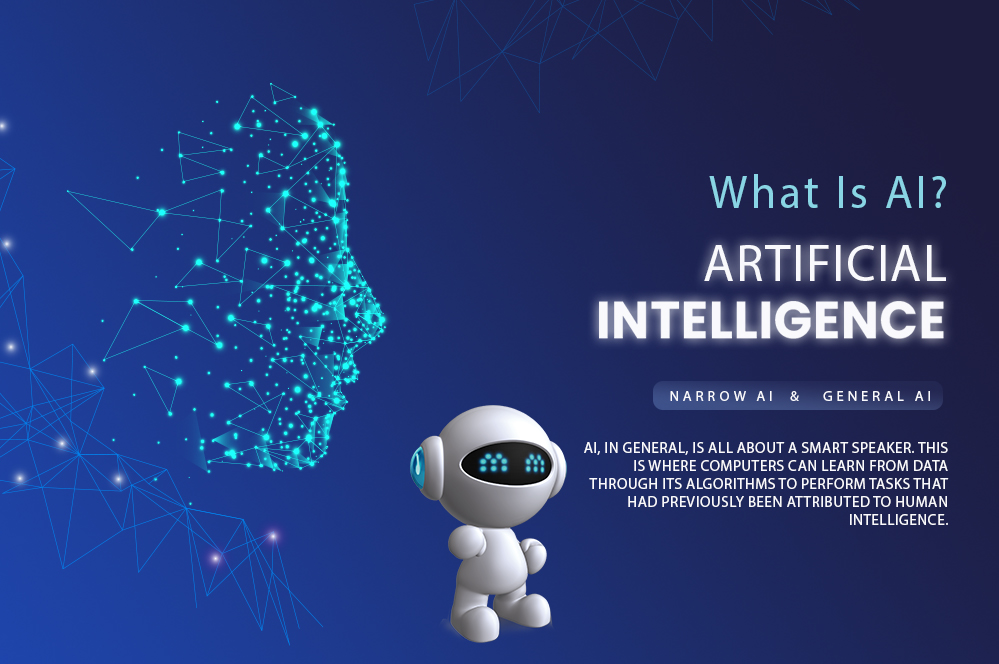
AI, in general, is all about a smart speaker. This is where computers can learn from data through its algorithms to perform tasks that had previously been attributed to human intelligence. Be that as it may, AI can still be broadly categorized as follows:

Narrow AI: This includes AI that is tuned to do just one job-from phone virtual assistants to algorithms that recommend products online.

General AI: A theoretical type that thinks and reasons like a human-a thing that could tackle any horizontal quandary that comes its way. Researchers and engineers are still on the drawing board to make this viable.

Superintelligent AI: This is perhaps a term used to refer to the higher intelligence level in AI on most tasks compared to human intelligence. Though it truly sounds exhilarating, many questions arise as to how it would look like with the redefined scope of play.

How Is AI Used Today?
Think of AI as jack-of-all-trades; it will save our map time, if not some money. Some people can name their uses.

In health care : Artificial Intelligence allows for disease detection as early as possible through tools that analyze medical images. It also enables personalized treatment in real-time appropriate to each patient’s needs.
In Retail: AI is being leveraged by banks to detect fraudulent transactions in real-time while investment apps use it for assisting users in managing their money.

There are online stores that know what you want to buy even before you realize it as a necessity. This is AI analyzing your browsing habits and interests.
In education, teaching has been ameliorated where students have AI-altered lessons at their own pace according to their needs. It helps tired teachers do their administrative work light-heartedly.

Transportation: As AIs in train mode, self-driving cars and smart traffic systems are gradually moving from the elusive to the more realistic. While the AI may seem beneficial, we must discuss where ugly begins, since there do come serious challenges.

Ethics and Bias: Sometimes in biased decision-making for some AI systems in favor of one over the other party-it sometimes gets to this as sometimes it fails to get a good age of diversity, or at times it outrightly forgets to embed fairness into how data should be processed. Thus, AI is a matter of fairness that must always be kept in mind.

Privacy: AI captures data live right from the user. The biggest challenge is bringing the balance in between privacy-so-value while sharing the information and innovations.

Complexity: Most of the AI runs black-box-meaning: Not even someone who is in the field can explain how the conclusion really was.

Regulation: On the government and organizational fronts, intense efforts might seem to be efforts to regulate AI, not really to kill creativity or provide safety and fairness.

Future Possibilities
The editorial suggests that the overtake of AI with its different prospects is something very important to remember. Discussions, just hints of what humanity may expect in the days to come.


Human-AI Cooperation-AI is not meant to be a substitute for human agencies but should therefore work with humans in partnership to enhance their creativity and productivity.

General AI Development-Scientists would like to create systems that can think and learn in an analogous manner to different ways of human comprehension. Although this is not yet real, staining assessments are being recorded.

Assisting Earth-AI is to play a significant role in global challenges, being ahead of nature’s onslaughts by prediction or optimizing national necessity.

Conclusion
Artificial Intelligence will probably change how we live, work, and relate with our world, apart from being a super tool in itself. Setbacks notwithstanding, the technology holds plenty of options for improving and tackling global challenges. Following the growth and deployment of AI in an ethical way should see everybody enjoying its benefits.