Book call





Techytrion
Techytrion
 11, May 2026
 Uncategorized
In today’s fast-paced work environment, professionals often find themselves busy all day without achieving meaningful outcomes. The challenge isn’t a lack of time-it’s how effectively that time is managed.
Time management is a critical skill that enables individuals to prioritize tasks, improve efficiency, and maintain a healthy work-life balance.
Why Time Management Matters
Effective time management plays a key role in both professional and personal growth.
Key Benefits:
✔ Improved productivity and efficiency
✔ Reduced stress and burnout
✔ Better decision-making
✔ Enhanced work-life balance
✔ Increased career growth opportunities
Common Time Management Challenges
Many professionals struggle due to:
- Frequent interruptions (calls, emails, meetings)
- Lack of clear priorities
- Multitasking habits
- Overcommitment
- Poor planning
Recognizing these challenges is the first step toward improvement.
Practical Strategies to Improve Time Management
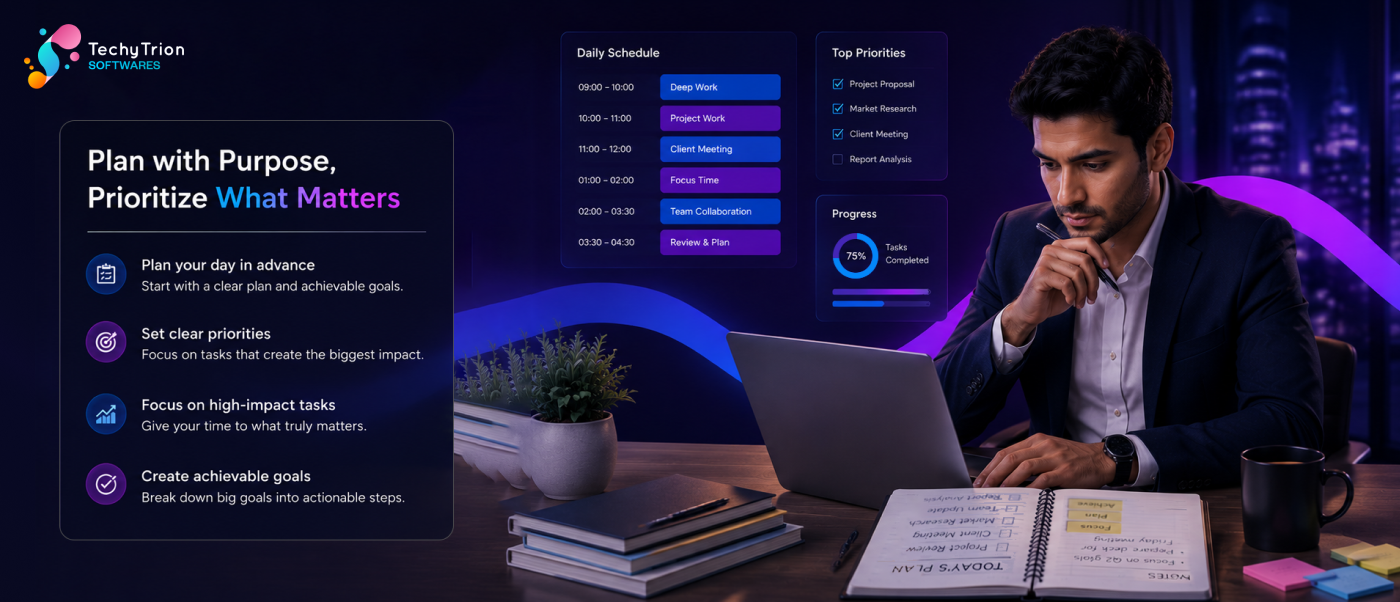
- Plan Your Day in Advance
Start your day with a clear plan. List tasks, set priorities, and define achievable goals.
- Focus on High-Impact Tasks
Not all tasks are equally important. Identify the ones that contribute most to your goals and prioritize them.
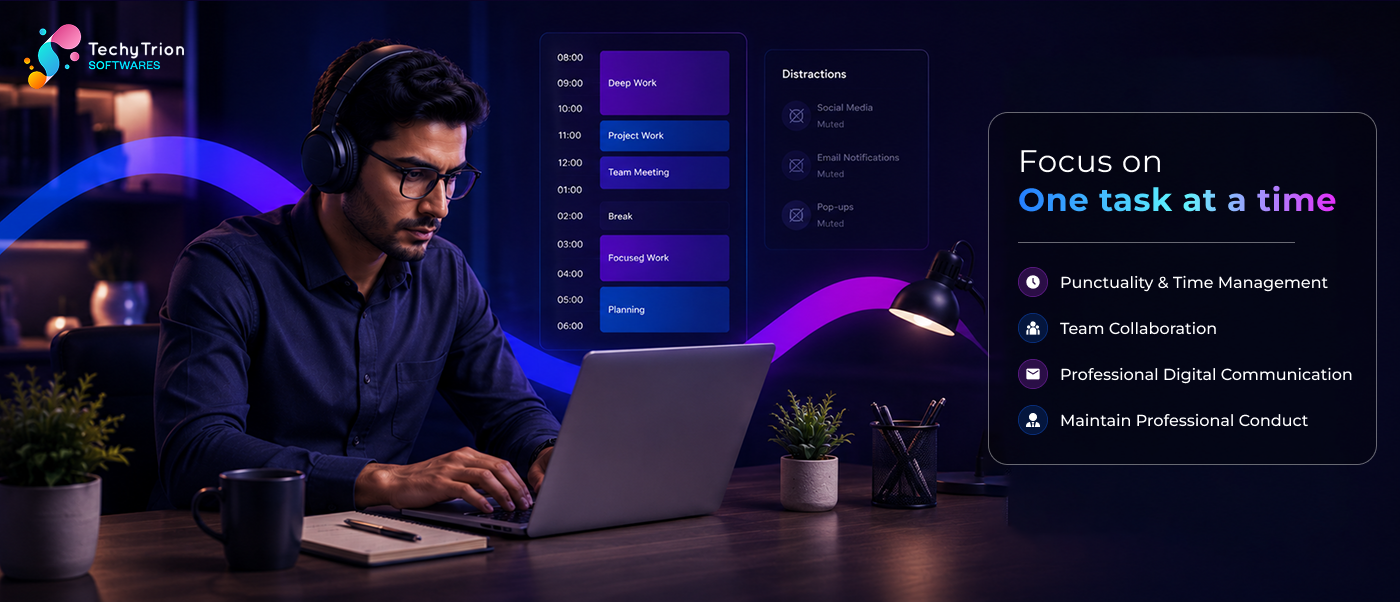
- Use Time Blocking
Divide your day into dedicated time slots for specific tasks to maintain structure and focus.
- Avoid Multitasking
Focus on one task at a time to improve quality and efficiency.
- Take Regular Breaks
Short breaks help refresh your mind and improve overall productivity.
- Minimize Distractions
Create a focused work environment by limiting notifications and unnecessary interruptions.
- Learn to Say “No”
Protect your time by avoiding low-priority or non-essential tasks.

Conclusion
Time management is not about doing more-it’s about doing what matters most. By adopting simple strategies and staying consistent, professionals can enhance productivity, reduce stress, and achieve long-term success.