


 Book call
🔧 The Most Popular PHP Frameworks in 2025 – A Developer’s Guide
PHP continues to form the backbone of a huge portion of the web, from personal blogs to enterprise-grade applications. Granular PHP has its benefits, but developers much prefer using frameworks to provide structure, speed, and built-in capabilities to make common tasks easy. Over the years there have been several PHP frameworks that have distinguished themselves from the pack – designed primarily for different types of developers and their choices for projects.
In this blog we will examine the most used PHP frameworks in 2025, what makes them great, and why they’re so widely adopted by developers across the world.
Laravel – The Developers Choice
Laravel is still the most popular PHP framework – and for good reason. With its elegant syntax, modern features, and established project support, Laravel has become the framework of choice for developers due to the speed of building quality web applications quickly. Whether it’s building a start-up MVP or an enterprise application, Laravel provides tools that allow for seamless development – routing, caching, authentication, and testing are all seamless and secure.
With its Blade templating engine, front-end development is a more seamless process, and Laravel’s Eloquent ORM also allows for more intuitive work with databases. And that’s before we mention some of the tools in the Laravel ecosystem like Laravel Forge for deployment, Laravel Nova for admin panels, or Laravel Vapor for serverless hosting. It’s not just a framework, it’s a real development platform.
Symfony – The Enterprise Standard Symfony is a very mature and flexible PHP framework. Symfony is very powerful and was developed to be flexible and scalable. Symfony can be more complicated than Laravel, however, the tradeoff is more power and flexibility. Symfony is a component-based framework, so you can use only what you need, so you can also use Symfony components in other frameworks/applications.
Many major frameworks (e.g., Drupal, and Magento) are built on Symfony. Symfony is also very popular in the enterprise; where long-term dedicated maintenance, performance, and security are key. Symfony has committed to very strict coding standards, and provides some of the best testing, configuration, and extensibility support in the industry. For larger, mission-critical applications, Symfony is arguably the best choice.
CodeIgniter – Simple and Lightweight
If you are looking for a simple, fast, and easy-to-understand framework, CodeIgniter has been a popular framework for many years. It has always been popular with beginners and team developers developing small projects, and for those who have deadlines they need to meet. With CodeIgniter, you do not need to worry about making a commitment to a larger framework that you may not fully perform coding style.
Speed is the largest benefit CodeIgniter offers. It is a light-weight framework that has very few elements needed to configure, and it runs well, even on the bare minimum of shared hosting. Just because it does not have some of the newer tools available in Laravel and Symfony does not mean that CodeIgniter can not be used. For projects of this size, speed,
low overhead is a benefit, making it a plausible option for quite a few different uses.
Yii2 – Combining Performance with Security
Yii2 has an excellent combination of modern features and performance. It is an ideal solution for web apps that require a strong emphasis on security, especially if it is a financial application, portal, or the backend of an enterprise application. Yii2 provides CSRF protection, XSS protection, input sanitization, and password hashing built in to completely secure your application.
One of the best features of Yii2 is Gii, a very powerful code generator that allows developers to create models, controllers, forms, and many other items. Yii2 is an excellent solution for teams that want to generate boilerplate code and speed up development. Yii2 also integrates seamlessly with all front-end libraries, including Bootstrap, providing developers with a complete end-to-end development solution.
Phalcon – Built for speed
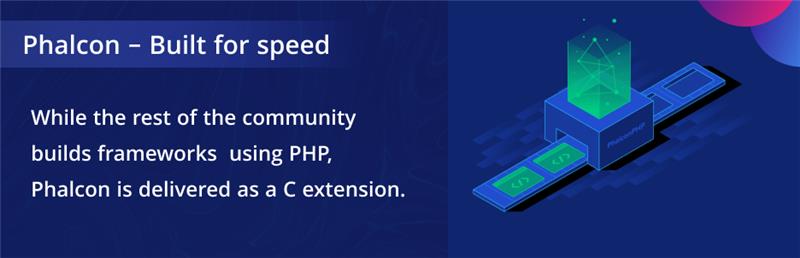
Phalcon is unique among the available PHP frameworks (don’t confuse it with frameworks like Symfony, Laravel or Codeigniter). While the rest of the community builds frameworks using PHP, Phalcon is delivered as a C extension. Because of this, Phalcon is so fast and lightweight (essentially it runs in the PHP engine). Since Phalcon applications are a C extension, the overhead of your application is extremely low, and it can serve requests at a lightning speed.
Despite Phalcon’s emphasis on speed, they have not neglected features. Phalcon supports base features such as MVC framework, ORM, templating, routing and caching – all great features for building modern web applications. However, since Phalcon is installed as a PHP extension, you may find the installation process a little more complicated than other frameworks; however, Phalcon is a very robust framework to run mission critical applications.
Laminas (Formerly Zend Framework) – Enterprise-Level Framework
Laminas, the successor of Zend Framework, is geared toward professionals and enterprise-sized applications. This framework focuses on extensibility and performance by providing a set of components that developers can use to create independently performant applications that desire fine control over extensibility and performance. Where Laminas shines is in its modularity and for catering to enterprise developer’s needs. Some of its features include dependency injection, event-driven programming, and service-oriented architecture (along with a full-blown service manager). Laminas has a higher learning curve than a framework like Laravel or CodeIgniter, but is a better option for organizations that want to pay for a scalable and maintainable solution for the long-term, especially if those organizations are migrating from legacy Zend applications.
Slim – The Minimalist’s Favorite
Slim can be regarded as a micro-framework for the development of small applications and RESTful APIs. Slim, due to its small footprint and simple syntax, is frequently used by developers who like the control of writing their own code and do not want to be encumbered by a giant framework or inclusion of functions they won’t use. Despite its simplicity, Slim is highly extensible through middleware, and community
packages. It is an excellent option for developers building an API, microservice, or web service where speed and simplicity are more important than complexity and functionality built into the framework. If you are building small but powerful, Slim is a framework to consider.
Conclusion – Choosing the right PHP framework
As of 2025, PHP frameworks provide developers with an opportunity to build applications that are scalable, dependable, and maintainable. Each framework has different strengths, and the best framework to choose will depend upon your project needs, your team’s expertise, and the project objectives.
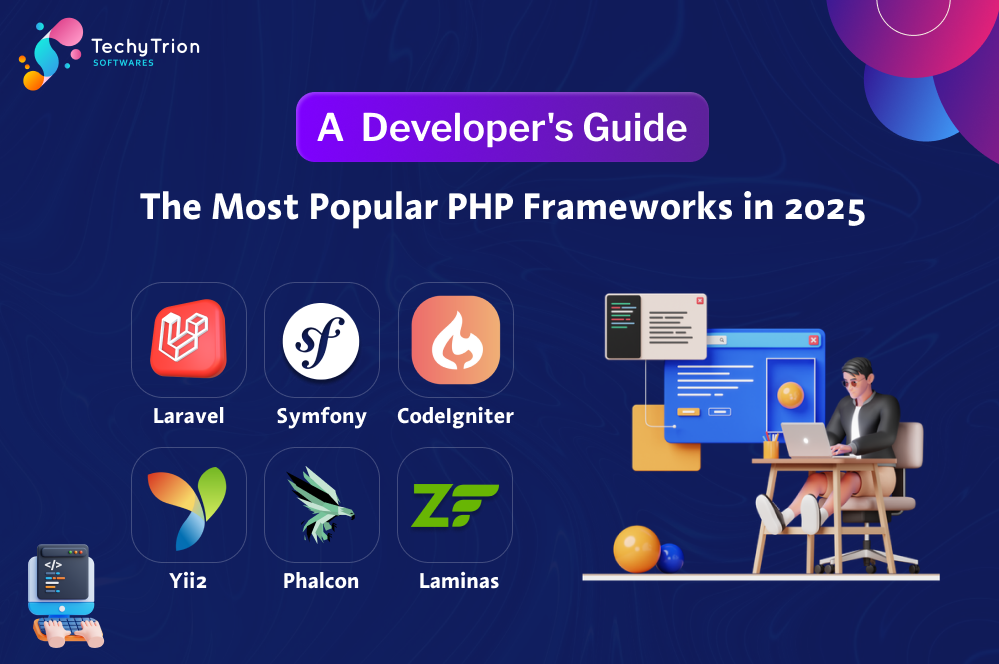
Laravel is a modern application PHP Framework option that includes a complete ecosystem. Symfony is still the undisputed champion of enterprise-grade applications. CodeIgniter is good for applications that are based on fast-prototyping, while Yii2 can guarantee speed, incorporating aggressive security. Phalcon ensures the best performance, Laminas can be suitable for larger organizations, while Slim is at its best for lightweight API development.
Whatever PHP framework you utilize, you will make a wise choice by implementing one; it will save you time, increase the quality of your code and allow you to produce better software.


