Book call





Techytrion
Techytrion
 20, Mar 2026
 Artificial Intelligence
In today’s fast-paced and competitive work environment, technical skills and qualifications alone are not enough to ensure success. What truly sets individuals and organizations apart is how people behave, communicate, and treat one another at work. This is where professional etiquette plays a vital role.
Professional etiquette is more than just saying “please” and “thank you.” It reflects respect, responsibility, and awareness in the workplace. When practiced consistently, it becomes the foundation of a positive work culture, fostering collaboration, trust, and long-term growth
What is Professional Etiquette?
Professional etiquette refers to the set of unwritten rules that guide behavior in a workplace. It includes:
- Respectful communication
- Punctuality and time management
- Proper email and meeting conduct
- Maintaining professionalism in interactions
- Being mindful of others’ time and space
These small yet impactful behaviors shape how employees perceive each other and the organization as a whole.
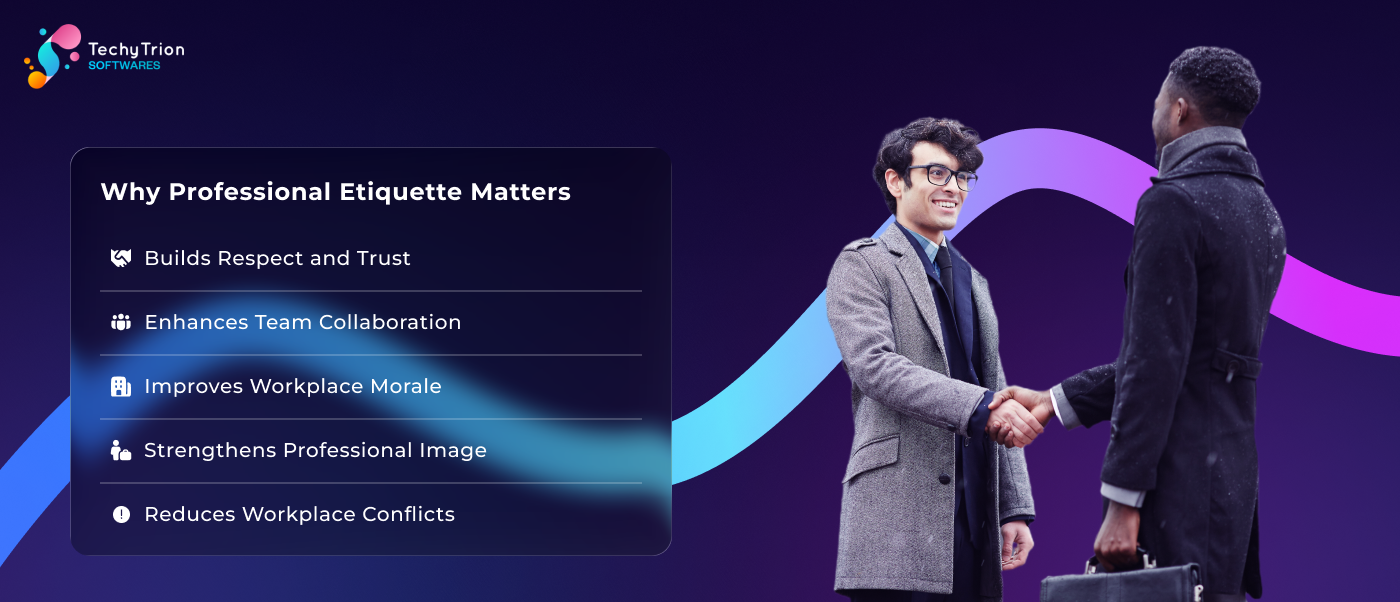
Why Professional Etiquette Matters
- Builds Respect and Trust
Respect is the backbone of any successful workplace. When employees communicate politely, listen actively, and value others’ opinions, it builds mutual trust. A respectful environment encourages people to share ideas openly without fear of judgment.
- Enhances Team Collaboration
Good etiquette promotes smoother communication and reduces misunderstandings. Teams that practice professionalism are more likely to collaborate effectively, leading to better problem-solving and innovation. - Improves Workplace Morale
A workplace where employees feel respected and valued naturally has higher morale. Simple gestures like acknowledging efforts, being courteous, and maintaining a positive attitude can significantly boost team spirit.
- Strengthens Professional Image
Employees represent the organization. Their behavior reflects the company’s values and culture. Strong workplace etiquette enhances both individual and organizational reputation, especially when interacting with clients or stakeholders.
- Reduces Workplace Conflicts
Many workplace conflicts arise from miscommunication or lack of respect. Practicing proper etiquette minimizes misunderstandings and helps maintain a harmonious environment.
Key Elements of Workplace Etiquette
✔ Effective Communication
Clear, polite, and professional communication—whether verbal or written—is essential. Avoid interrupting others, use respectful language, and ensure messages are concise and appropriate.
✔ Punctuality
Being on time shows respect for others’ schedules. Whether it’s meetings, deadlines, or daily reporting, punctuality reflects reliability and discipline.
✔ Email and Digital Etiquette
In the digital age, communication often happens through emails and messaging platforms. Using proper tone, avoiding unnecessary messages, and responding timely are crucial aspects of professionalism.
✔ Respect for Diversity
Workplaces today are diverse. Respecting different perspectives, cultures, and working styles is key to maintaining an inclusive environment.
✔ Professional Appearance and Behavior
Maintaining appropriate dress code, body language, and conduct helps create a professional atmosphere.
Role of Organizations in Promoting Etiquette
Building a culture of professionalism is not just an individual responsibility—it’s also an organizational effort. Companies can:
- Provide etiquette and soft skills training
- Set clear behavioral expectations
- Lead by example through management
- Encourage open communication and feedback
- Recognize and reward professional behavior
When leadership demonstrates strong etiquette, employees are more likely to follow

Impact on Long-Term Success
A workplace built on professional etiquette experiences:
- Better employee retention
- Stronger employer branding
- Increased productivity
- Healthier work relationships
Ultimately, a positive work culture leads to both employee satisfaction and business success.
Conclusion
Professional etiquette may seem like a small aspect of workplace behavior, but its impact is powerful and far-reaching. It shapes how employees interact, collaborate, and grow together.
By practicing simple yet meaningful habits—respect, communication, punctuality, and professionalism—organizations can create a work environment where people feel valued and motivated.
In the end, a positive work culture is not built overnight—it is cultivated through everyday actions and consistent professional behavior.